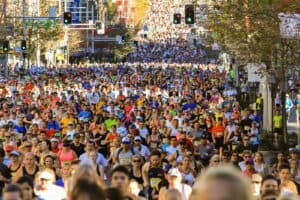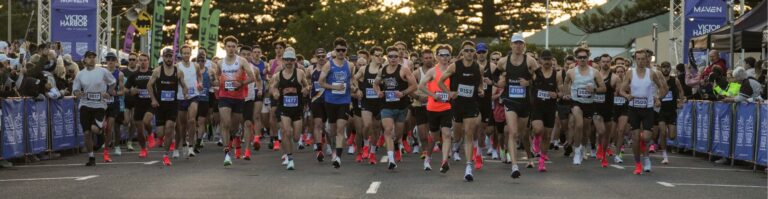

Marathon running in Australia isn’t just healthy, it’s thriving.
Across the country, major marathon events recorded double-digit growth in 2025, with some regional races more than doubling their finisher numbers year-on-year. From the global ambitions of Sydney to the grassroots growth of Ballarat, the message is clear: Australians are embracing the marathon in record numbers.
Using official 2025 finisher data, we’ve broken down Australia’s marathon landscape into three clear tiers, and examined what’s driving not just bigger fields, but faster performances as we head into 2026.
Tier 1 Marathons: Australia’s Big Three
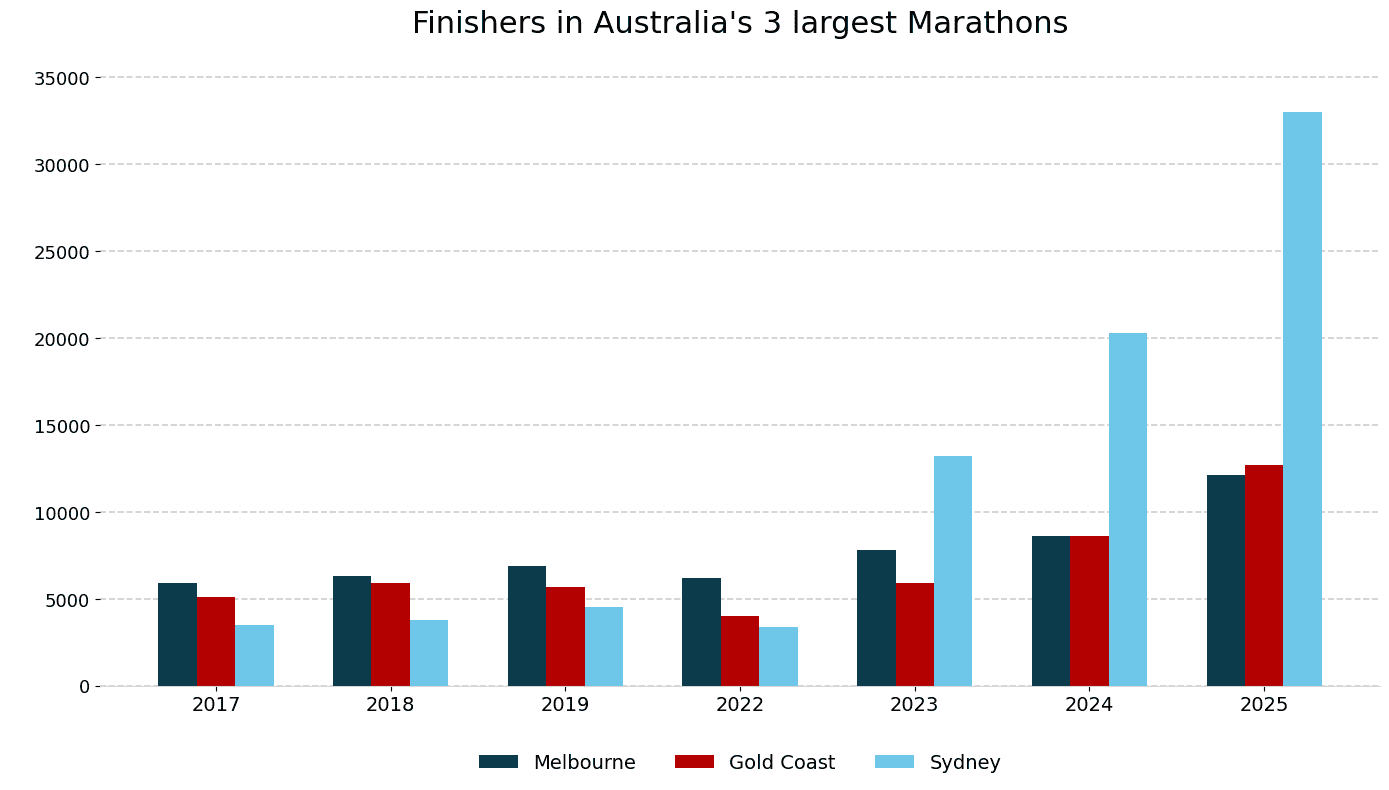
These events now sit in a league of their own, combining scale, international ambition, and deep local participation. Sydney has won the participant arms race with their elevation to a World Marathon Major, while Gold Coast has overtaken Melbourne.
Sydney Marathon
- 2025 finishers: 32,980
- Growth: +62.6%
Sydney has firmly established itself as Australia’s premier marathon. With near-unprecedented growth and a strong push toward global recognition, the Sydney Marathon is no longer just Australia’s biggest: it’s positioning itself among the world’s major city marathons.

Gold Coast Marathon
- 2025 finishers: 12,710
- Growth: +46.7%
Long regarded as Australia’s fastest marathon, the Gold Coast continues to attract PB chasers, first-timers, and elite athletes alike. Its consistency and reputation remain unmatched. And who doesn’t love the Gold Coast in July!
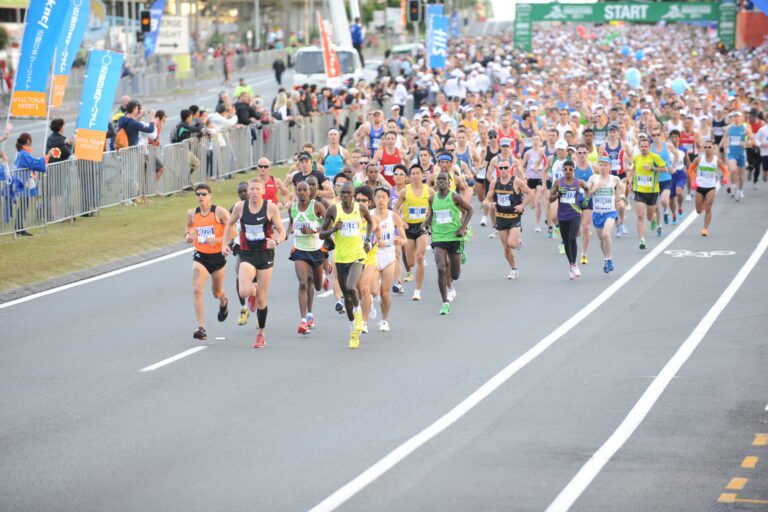
Melbourne Marathon Festival
- 2025 finishers: 12,145
- Growth: +40.0%
Melbourne’s evolution into a true festival of running continues, underpinned by a strong club culture and one of the most iconic finishes in Australian sport: the MCG. In 2026 the event moves to a two-day format, positioning itself for further growth.

Tier 2 Marathons: Strong and Growing
(1,000+ finishers in 2025)
These events form the backbone of marathon running in Australia: large enough to feel significant, yet close enough to the community to retain a unique character worth lacing up the shoes for.
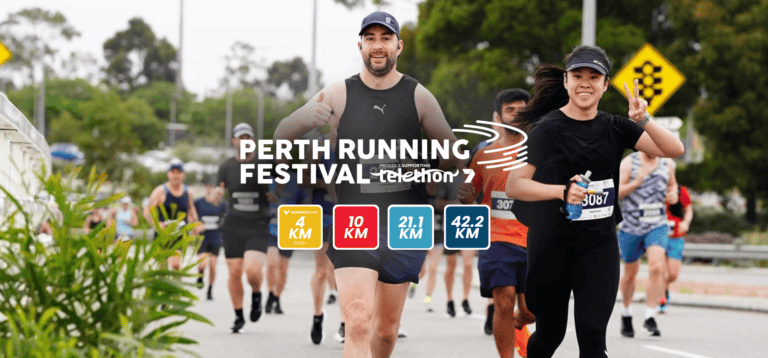
- Perth Running Festival: 3,019 (+30.2%)
- Canberra Marathon Festival: 2,526 (+16.9%)
- Sunshine Coast Marathon Festival: 2,488 (+51.3%)
- Brisbane Marathon: 2,377 (+65.0%)
- Ballarat Marathon: 2,341 (+130.0%)
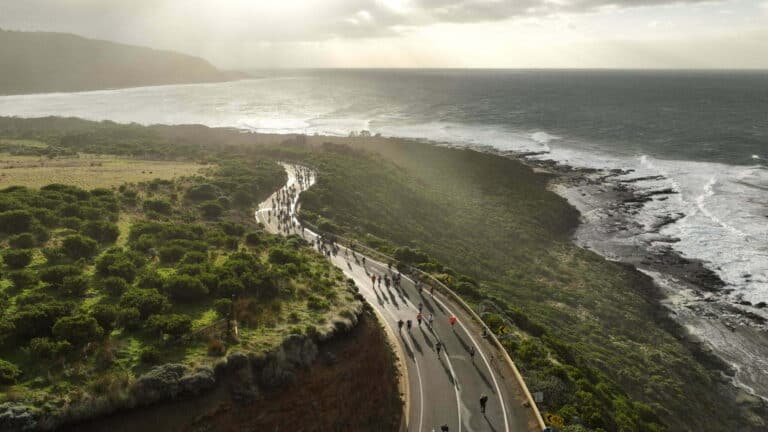
- Great Ocean Road Running Festival: 1,853 (+14.8%)
- Noosa Marathon: 1,080 (-8.1%)
Ballarat’s growth stands out as one of the great stories of 2025, while Sunshine Coast and Brisbane have rapidly cemented themselves as should-run events on the east coast calendar.



Faster Fields, Higher Standards: Australia’s Elite Are Rising Too
The growth in marathon participation tells only half the story.
Just as notable in 2025 has been the sharp rise in performance standards among Australia’s fastest marathoners. The depth required to finish inside the national Top 10 — for both men and women — is now dramatically higher than it was just a decade ago.
Top 10 Fastest Australian Men – 2025
| Rank | Time | Athlete | Event |
| 1 | 2:09:11 | Andy Buchanan | London Marathon |
| 2 | 2:10:28 | Liam Boudin | Seville Marathon |
| 3 | 2:11:14 | Tom Do Canto | Valencia Marathon |
| 4 | 2:14:06 | Ryan Gregson | Sunshine Coast Marathon |
| 5 | 2:15:02 | Jack Rayner | Melbourne Marathon |
| 6 | 2:16:24 | Sam Blake | Reggio Emilia Marathon |
| 7 | 2:16:42 | Steve McKenna | Melbourne Marathon |
| 8 | 2:16:56 | Reece Edwards | Ballarat Marathon |
| 9 | 2:17:38 | Fraser Darcy | Melbourne Marathon |
| 10 | 2:18:08 | Bailey Murzecki-Hince | Melbourne Marathon |
Top 10 Fastest Australian Women – 2025
| Rank | Time | Athlete | Event |
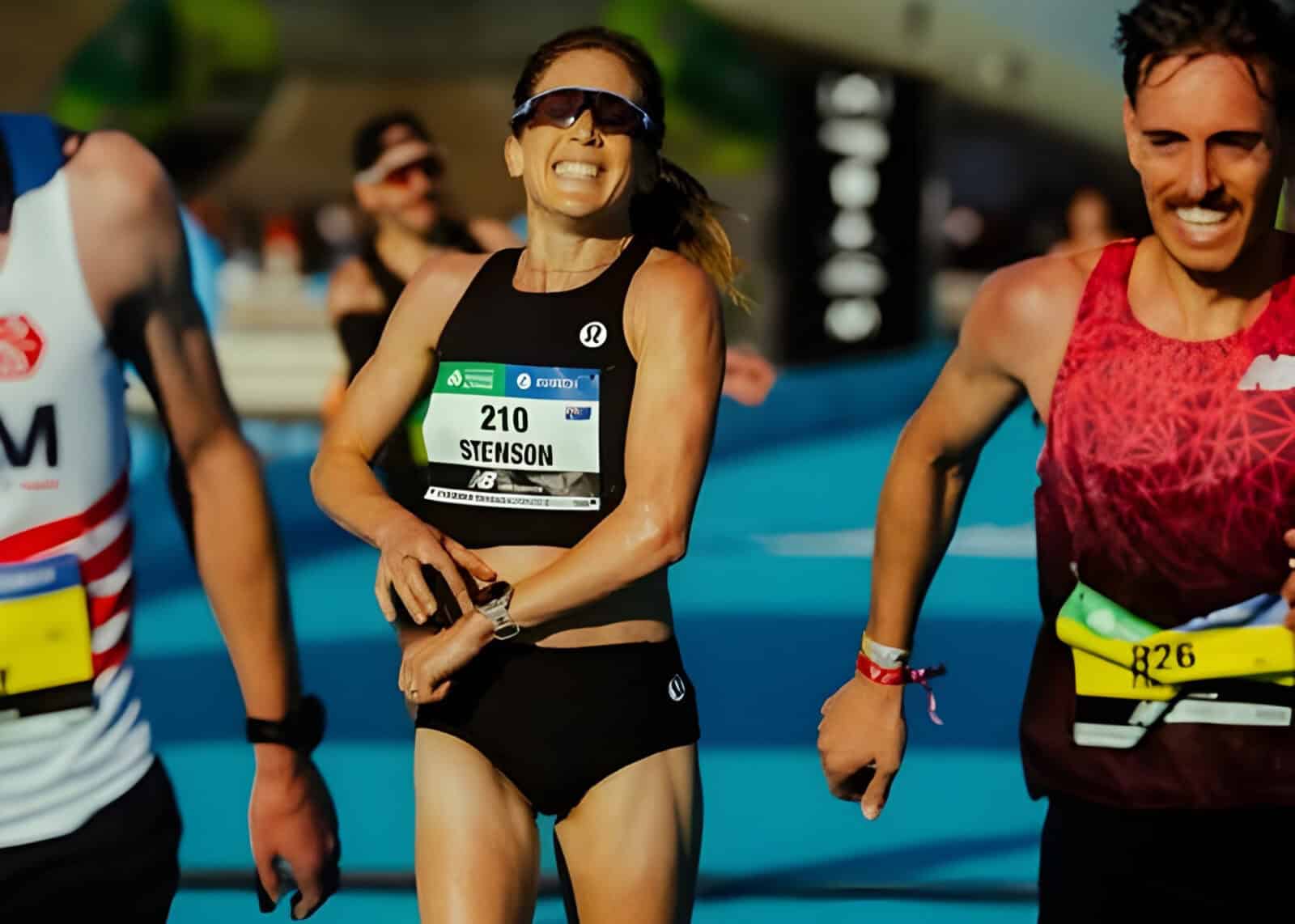
| 1 | 2:21:24 | Jess Stenson | Valencia Marathon |
| 2 | 2:23:29 | Izzi Batt-Doyle | Nagoya Marathon |
| 3 | 2:24:53 | Leanne Pompeani | Nagoya Marathon |
| 4 | 2:28:51 | Genevieve Gregson | Valencia Marathon |
| 5 | 2:30:26 | Caitlin Adams | Melbourne Marathon |
| 6 | 2:30:50 | Rebecca Lowe | Valencia Marathon |
| 7 | 2:31:57 | Lisa Weightman | Hangzhao Marathon |
| 8 | 2:33:05 | Abigail Norberg | Valencia Marathon |
| 9 | 2:33:55 | Kate Mason | Ballarat Marathon |
| 10 | 2:34:11 | Simone McInnes | Valencia Marathon |
A Decade of Change: How Much Faster Is “Fast”?
To understand how significant this shift has been, compare the qualifying standard required to make the Australian Top 10 in 2015 versus 2025.
Men
- Top 10 standard in 2015: 2:25:32
- Top 10 standard in 2025: 2:18:08
That’s an improvement of 7 minutes and 24 seconds — a massive leap at sub-elite level.
Women
- Top 10 standard in 2015: 2:47:30
- Top 10 standard in 2025: 2:34:11
An even more striking improvement of 13 minutes and 19 seconds, underlining how rapidly the women’s marathon has advanced in Australia.
Is It Just the Shoes?


It would be naïve to ignore the impact of super shoe technology. Advances in footwear have improved running economy and allowed athletes to sustain faster paces for longer.
But shoes alone don’t explain:
- The breadth of improvement across the athlete pool
- The consistency of faster times across different courses and conditions
- The number of athletes now capable of running at this level
If footwear were the only factor, we’d see isolated breakthroughs. Instead, we’re seeing system-wide progression.
What’s Really Driving the Rise in Standards?
Several deeper trends are shaping Australian marathon running:
- More professional training environments, even at sub-elite level
- Greater access to fast international races, raising expectations at home
- Deeper domestic fields, particularly at Sydney, Gold Coast and Melbourne
- Earlier transitions to the marathon by high-quality track and cross-country athletes
Perhaps most importantly, depth breeds depth. When a 2:18 (men) or 2:34 (women) is required just to crack the Top 10 nationally, training standards and competitive intent lift across the board.
Tier 3 Marathons: Depth Across the Country
Beyond the major and mid-sized events lies a broad Tier 3 landscape, smaller marathons that play a vital role in:
- Developing new marathon runners
- Supporting regional running communities
- Providing accessible marathon opportunities nationwide
👉 Explore all of Australia’s Upcoming Marathons below












Looking Ahead in 2026
The 2025 data tells a clear story:
- Fields are bigger
- Standards are higher
- Australian marathon running is deeper than ever
With growing participation, faster performances, and a calendar rich in choice, the marathon has never been more central to Australia’s running culture.